June 13, 2024
Invisalign
Invisalign Aftercare: Keeping Your Smile Straight and Shining
Congratulations! You’ve successfully completed your Invisalign treatment and achieved that dazzling, straight smile you’ve always dreamed of. But the journey doesn’t end there. Just like any accomplishment, maintaining your beautiful smile requires a little dedication in the form of proper aftercare.
This blog delves into the world of Invisalign aftercare, providing you with essential tips and tricks to ensure your teeth stay perfectly aligned and your smile continues to shine brightly.
Why Aftercare Matters: Retainers – The Guardians of Your Smile
Invisalign uses a series of clear, removable aligners to gently shift your teeth into their ideal positions. However, once you achieve that perfect smile, your teeth still need time to settle into their new home. This is where retainers, your post-treatment companions, come in.
Think of retainers as the guardians of your smile. They help prevent your teeth from drifting back to their original positions, a natural tendency after orthodontic treatment. Consistent retainer wear is the golden rule of Invisalign aftercare, ensuring your hard-earned straight smile lasts a lifetime.
Types of Retainers: Choosing the Right Fit
There are two main types of retainers used after Invisalign treatment:
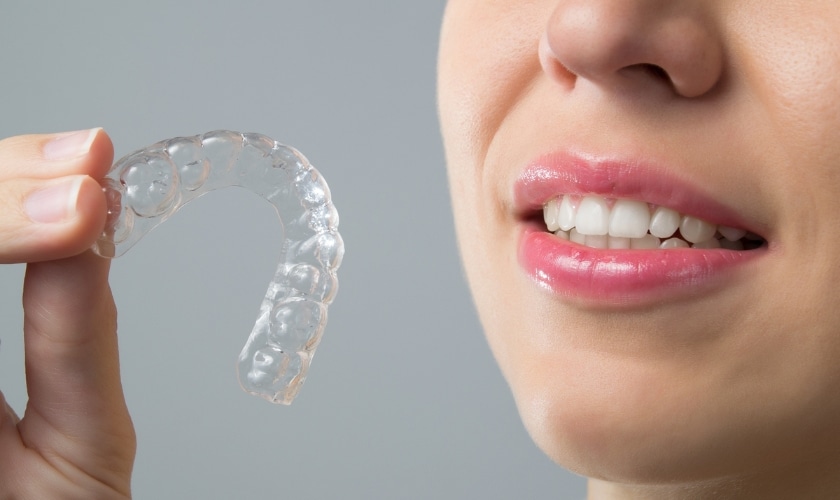
- Removable Clear Retainers: These are similar in appearance to your Invisalign aligners, typically made of thin, custom-molded plastic. They are virtually invisible and comfortable to wear.
- Fixed Retainers: These are thin wires bonded to the back of your lower and sometimes upper front teeth. They offer a more permanent solution and require less maintenance compared to removable retainers.
The type of retainer your dentist recommends will depend on your specific needs and preferences. Here’s a breakdown of their pros and cons to help you understand which might be the right fit for you:
- Removable Clear Retainers:
- Pros: Discreet, comfortable, easy to clean.
- Cons: Require discipline for consistent wear, can be lost or damaged if not properly cared for.
- Fixed Retainers:
- Pros: Less maintenance required, practically invisible when bonded correctly.
- Cons: Permanent (requires removal by a dentist), might require cleaning around the wire for proper oral hygiene.
Additional Considerations:
- Age: For teenagers or those prone to losing retainers, fixed retainers might be a better option due to the lower risk of misplacement.
- Complexity of Treatment: More complex cases that involved significant tooth movement might benefit from the added stability of fixed retainers.
- Personal Preference: Ultimately, the choice between removable and fixed retainers comes down to your personal preferences and lifestyle. Discuss both options with your dentist to find the solution that best suits you.
The Importance of Consistent Retainer Wear: A Schedule for Success
The key to maintaining your perfect smile lies in consistent retainer wear. Here are some general guidelines from most dentists:
- Removable Retainers: Most dentists recommend wearing removable retainers full-time for the first few months after treatment, followed by nightly wear for life. However, some cases might require full-time wear for a longer duration.
- Fixed Retainers: Fixed retainers typically require less frequent maintenance, but it’s crucial to keep the area around the wire clean and to schedule regular checkups with your dentist to monitor their condition.
Remember, these are just general recommendations. Your dentist will provide specific instructions based on your individual case. It’s important to follow their guidance to ensure optimal results.
Caring for Your Retainers: Keeping Them Clean and Functional
Just like your teeth, your retainers need proper care to maintain their effectiveness and longevity. Here are some tips for keeping your retainers clean:
- Brushing: Brush your removable retainers daily with a soft-bristled toothbrush and mild soap or toothpaste (avoid harsh chemicals). Clean both the inner and outer surfaces to remove any plaque or debris.
- Rinsing: Rinse your retainers thoroughly with clean water after brushing and before putting them back in your mouth.
- Soaking (Optional): Some dentists might recommend soaking your retainers in a special cleaning solution periodically. Follow their instructions carefully regarding soaking time and solution type. Consider using denture cleansers specifically designed for retainers.
- Handling: Always handle your retainers with care. Avoid bending, twisting, or dropping them, as they can crack or break.
Recent Posts

Feb. 02, 2026
Can Dr. Modjeski Help Me Get a Date-Ready Smile in Just One Visit?

Dec. 03, 2025
Fixing Chipped or Gapped Teeth: Can Porcelain Veneers Solve Multiple Smile Problems at Once?
Nov. 03, 2025
Fixing a Crossbite: Functional and Aesthetic Correction with Invisalign in Yorkville, IL

Oct. 03, 2025
The Clock is Ticking: 5 Essential Steps to Take Before You “Lose-It” on Your Dental Insurance Benefits
Sep. 05, 2025
The Longevity of Dental Implants: A Long-Term Solution for Yorkville Residents
Catagories
- cosmetic dentist in Yorkville (0)
- Cosmetic Dentistry (5)
- Crooked Teeth (1)
- Crowns and bridges (1)
- Dental Implants (18)
- Dentist in Yorkville (4)
- Dentures (4)
- Digital X-Rays (1)
- Emergency Dentistry (4)
- Invisalign (7)
- Oral Care (8)
- Oral Surgery (1)
- Periodontal Therapy (3)
- Porcelain Veneers (6)
- Prairie Garden Dental (44)
- Root Canal Treatment (4)
- Sleep apnea (4)
- Sumner Dental Group (0)
- Teeth Whitening (7)
- tooth extraction (3)
- Uncategorized (6)
- Veneers (2)